Showing all 10 results
- AC Fans17 products
- AC AXIAL FANS17 products
- DC FANS93 products
- DC AXIAL FANS65 products
- DC Blower10 products
- DC Cross Flow Fan10 products
- DC Impeller7 products
DC Blower
Showing all 10 results
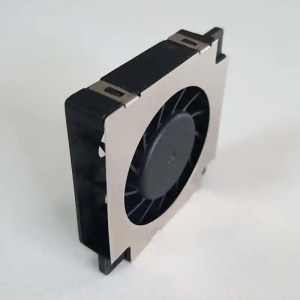
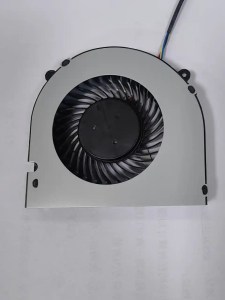
DC blowers on the Axial Fan Supply site are specialized for industrial cooling applications where high static pressure and directional airflow are critical. Unlike DC axial fans, which move large volumes of air in open spaces, DC blowers use centrifugal impellers to generate strong, concentrated airflow capable of overcoming dense filters, heat sinks, ducts, and narrow vents. Their performance is defined by several key parameters:
-
Voltage and Current: Common rated voltages include 5V, 12V, and 24V DC, with current draw varying by size and airflow capacity. Smaller units typically draw tens to hundreds of milliamps, while larger blowers may reach several amps. These values directly impact power consumption, which ranges from under 1 watt for compact models to over 20 watts for high-capacity units.
-
Airflow (CFM/m³h): DC blowers provide moderate airflow (CFM) relative to axial fans but excel at maintaining flow under back pressure. Typical models range from 5–80 CFM, depending on impeller size and speed.
-
Static Pressure: Measured in Pascal (Pa) or mmH₂O, static pressure ratings are crucial for overcoming system resistance. DC blowers generally operate efficiently under 1–6 mmH₂O, ensuring consistent performance in confined or obstructed spaces.
-
RPM and Control: Impeller speeds can reach 2000–6000 RPM, often controllable via PWM signals for precise thermal management. Some models include tachometer feedback for system monitoring.
-
Noise and Bearings: Noise levels are moderate, with ball or fluid dynamic bearings extending operational life for continuous industrial use.
In industrial applications, DC blowers are ideal for telecom cabinets, UPS systems, EV battery cooling, medical devices, inverter modules, and compact electronics. Their combination of high static pressure, reliable airflow, and controllable power draw ensures effective thermal management in enclosed, high-resistance environments where axial fans would struggle. By maintaining consistent airflow under load, they protect sensitive components, improve system efficiency, and reduce overheating risks in continuous operation scenarios.