Showing all 7 results
- AC Fans17 products
- AC AXIAL FANS17 products
- DC FANS93 products
- DC AXIAL FANS65 products
- DC Blower10 products
- DC Cross Flow Fan10 products
- DC Impeller7 products
DC Impeller
Showing all 7 results
What is a DC impeller (motorized impeller) AFS VENTILATION fan
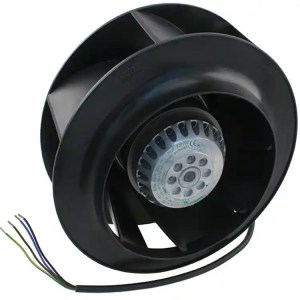
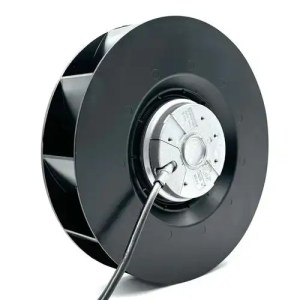
A “motorized impeller” (or DC impeller FAN) is essentially a radial (centrifugalstyle) fan whose impeller is directly mounted on a DC externalrotor motor. This eliminates the need for a separate shaft, reduces bearing loads and vibration, and makes for a more compact package.
Air enters axially, toward the center (“eye”) of the impeller, and is discharged radially (i.e. perpendicular) under centrifugal force — allowing the fan to work well against static resistance, such as ducts, filters, heat exchangers, or restricted airflow paths.
Because the motor is immersed in the airstream, heat from the motor is carried away — improving thermal management of the motor itself and enabling continuous operation under load.
⚙️ Typical Electrical & Airflow Performance — Ranges & Examples
From datasheets / public listings of DCimpeller fans, we can observe typical performance ranges:
Voltage: Many DC impeller fans are rated for 24 VDC or 48 VDC. Some may also support other DC voltages depending on the design.
Power / Current: For example, one 24 V DC impeller model shows motor power about 78 W with a current draw around 3.3 A at full load.
Airflow (CFM): Airflow for DC impeller units can be very high compared to small axial fans. Some models are specified with maximum airflow up to 2,047 CFM. select.cfmfans.com+1
Static Pressure & Pressure Handling: Because of the centrifugal/radial design, these impellers generate considerably greater static pressure than simple axial fans — making them able to push air through ducts, filters, or other restrictive paths.
Speed / Control: Many DC impeller fans support full speed control via PWM or DCvoltage adjustment, which allows tuning airflow according to demand (e.g. less airflow during light loads, more when heavy cooling is needed).
Reliability & Cooling: The design (motor + impeller in airstream) offers efficient motor cooling and generally good reliability. Bearing systems (often ball bearings) help for continuous-duty operation under industrial conditions.
🏭 Industrial Cooling — Typical Usecases & Strengths
Given their characteristics, DC impeller fans are well suited for:
Cabinet / enclosure cooling: For industrial control cabinets, electrical enclosures, or electronics racks — especially where air must be forced through filters or compact ducts. The high static pressure and volume capability ensures consistent cooling even under airflow resistance.
HVAC / ventilation / ducted airflow: Because they can overcome resistance, impeller fans are good for supply/exhaust in HVAC units, ventilation ducts, air filtration systems, or heatexchanger coils.
Heat exchangers / cooling coils, industrial equipment housings: When heat load is significant and air must travel through fins, filters, or narrow vents. The radial discharge helps maintain airflow and pressure over the heatexchange surfaces.
Environments requiring speed control and reliability: Thanks to their DC externalrotor design, these fans allow fine control (e.g. via PWM), energy-efficient operation, and stable performance — important in industrial systems that might vary load over time. 📦 Example from a Catalog
A concrete example from a catalog entry: a “30Impeller” unit from the supplier you linked is specified at 12 V / 24 V DC, with a rotational speed of 2400–3000 rpm, and an airflow in the range 20.6–49.4 CFM. axialfansupply.com+1 — this shows that small impellertype fans are available for lowcapacity but compact cooling tasks. For larger industrial uses, higherpower / higherCFM impeller fans (e.g. 78 W, 3.3 A, hundreds to > 600 CFM) are common.
✅ What to Expect — Strengths & Limitations
Strengths
High airflow capacity (much higher than small axial fans) when needed.
Ability to overcome static resistance: good for ducts, grilles, filters, heatexchangers.
Compact footprint relative to volume moved (motor + impeller combined).
Speed/control flexibility (PWM or variable DC), energy efficiency, potentially quieter than large axial fans under load.
Good for enclosed or ducted industrial cooling applications (control panels, HVAC, electronics enclosures, filtration, etc.).
Limitations / Considerations
These fans often draw significant power (tens of watts to tens of amps) — so the power supply must match.
For very fine-grained airflow control or extremely low-noise contexts, even slower axial fans or crossflow fans may be advantageous.
Because impellers produce radial discharge, system design (ducting, shroud, inlet/outlet geometry) matters a lot: poor design may hamper airflow or efficiency.
🎯 Conclusion — When DC Impeller Fans Shine
DC impeller fans excel when you need high-volume airflow under resistance, compact installation footprint, good static pressure performance, and reliable continuous operation — typical in industrial cooling, enclosure ventilation, HVAC ducted systems, and heatexchanger cooling.